
IF YOU GO TO https://gcmafplus.com AND USE CODE “DRWOO” YOU WILL RECEIVE ADDITIONAL 5% OFF ALL OF YOUR ORDERS.
REMEMBER IF YOU ARE LOOKING FOR PROFESSIONAL MEDICAL ADVICE PLEASE GO TO SEE YOUR MEDICAL PRACTITIONER.
What is GcMAF and Why It Matters in Autism?
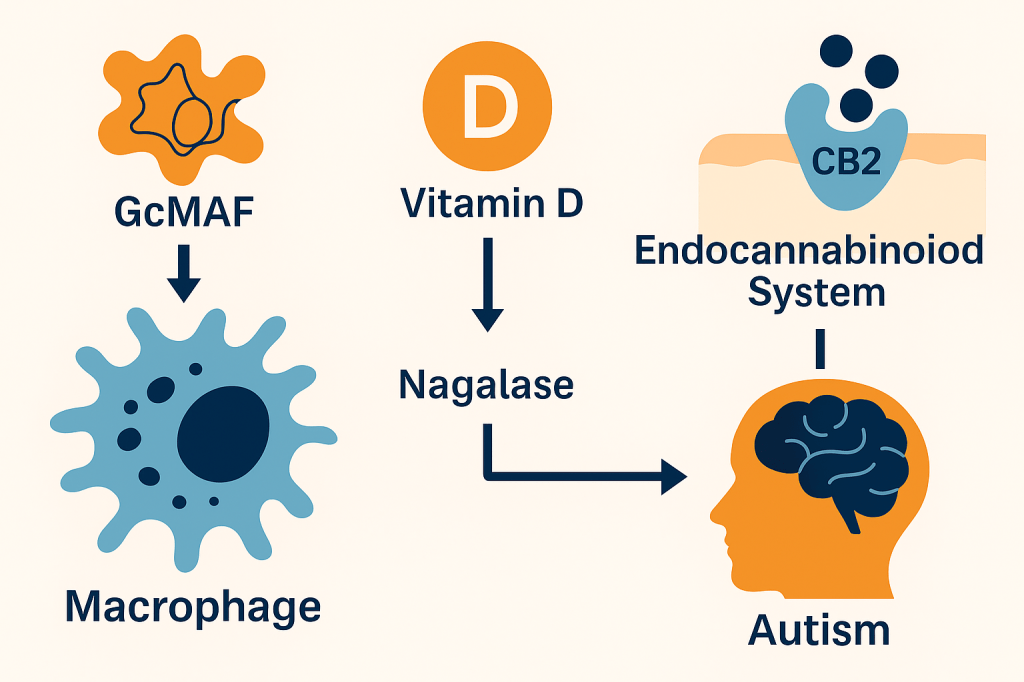
GcMAF stands for “Gc protein-derived Macrophage Activating Factor.” It is a protein that the body can naturally produce when another protein—vitamin D-binding protein (DBP)—is properly modified. GcMAF plays a critical role in “waking up” macrophages, which are immune cells responsible for identifying and destroying pathogens, damaged cells, or even abnormal cancer cells.
In children with autism, many studies have found signs of immune system dysregulation, especially involving macrophages. One area of growing interest is how the endocannabinoid system (ECS)—a biological network involved in immune and nervous system balance—might also be disrupted in autism.
This article explores how GcMAF may influence both the immune system and the ECS, offering hope for future autism therapies.
The Science Behind It: GcMAF and Immune Cell Activation
Research has shown that GcMAF can normalize altered gene expression in macrophages derived from blood monocytes in autistic children. Using a highly sensitive method called RT-PCR, scientists observed that GcMAF significantly increased the activity of certain immune-related genes.
In simpler terms:
Children with autism often have immune cells that don’t behave normally. GcMAF may help “reset” or reactivate these cells to function better.
The Endocannabinoid System (ECS) and Autism
The ECS helps regulate many body systems, including the brain, gut, and immune responses. One of its key players is the CB2 receptor, which is found on immune cells like macrophages and microglia (brain-resident immune cells).
In previous studies, scientists found elevated CB2 gene expression in blood cells from autistic children. Interestingly, in this newer study, they noticed that CB2 protein levels were lower in cultured macrophages from the same children—suggesting that while the body may be trying to overcompensate by producing more CB2 instructions (RNA), the actual production of the CB2 protein is impaired at a later step.
This could indicate a “confused” immune system—trying to balance itself, but failing due to disrupted signaling.
GcMAF’s Role in Fighting Cancer and Inflammation
The use of GcMAF is not new. It was first studied by Dr. Nobuto Yamamoto, who found that it could activate macrophages to kill cancer cells. Other researchers later discovered that GcMAF might also block the formation of new blood vessels (angiogenesis) that feed tumors.
Surprisingly, similar anti-inflammatory and anti-angiogenic effects have been observed with:
- CBD, the non-psychoactive compound in cannabis, which also affects CB2 receptors,
- Vitamin D3 (Calcitriol), which helps regulate immune activity and inflammation.
Together, these findings suggest that GcMAF, CBD, and Vitamin D3 might be working in related ways—and all may have a role in regulating the immune dysfunctions seen in autism.
The Link with Vitamin D Deficiency
Vitamin D has been a hot topic in autism research. Many studies have linked low levels of vitamin D during pregnancy or early childhood to an increased risk of autism.
Vitamin D doesn’t just support bones—it plays a role in:
- Brain development (neurogenesis),
- Gene regulation,
- Inflammatory control via immune cells.
One key problem in autism is the increased presence of an enzyme called nagalase. Nagalase blocks the body’s ability to produce GcMAF by “cutting off” the necessary sugar structures from DBP. This means the immune system loses a critical tool for activating macrophages.
High nagalase = low GcMAF = poor immune function.
This mechanism has been observed not just in autism but also in autoimmune diseases like systemic lupus erythematosus (SLE).
Bridging the Immune and Nervous Systems
The study referenced here—conducted at the University of Naples, Italy—offers valuable evidence that GcMAF may help restore immune balance in children with autism by:
- Reactivating dormant macrophages,
- Normalizing gene expression,
- Improving communication within the endocannabinoid system.
Importantly, this points to a dual role for the CB2 receptor:
- Overactive in monocytes (possibly contributing to inflammation),
- Underactive in mature macrophages (possibly allowing chronic dysregulation).
This duality may explain the “immune confusion” seen in autism.
What This Could Mean for the Future
While these are early findings and more large-scale clinical trials are needed, GcMAF shows real promise as a potential therapy in autism spectrum disorders (ASD). It appears to:
- Support immune function,
- Improve ECS signaling,
- Possibly counteract chronic inflammation.
At the same time, vitamin D levels and nagalase activity could be used as biomarkers to identify children who may benefit from such immune-targeted interventions.
📚 Scientific References
- Yamamoto N. et al. GcMAF and macrophage activation in cancer. Anticancer Res.
- Siniscalco D. et al. (2014). GcMAF activates macrophages in children with autism. J Neuroinflammation. DOI
- Solinas M. et al. CBD inhibits angiogenesis via CB2R. Br J Pharmacol.
- Cannell JJ. et al. Vitamin D and autism. Dermato-Endocrinology.
- Kanda Y. et al. Anti-angiogenic effects of GcMAF. Anticancer Research.
💬 In Plain Words
Children with autism often have immune systems that work differently.
Scientists are discovering that proteins like GcMAF—made from vitamin D—might help balance that system and even help the brain work better.
It’s not a miracle cure, but it’s a promising path that deserves more attention.
 Planet of Health Organisation
Leave a comment